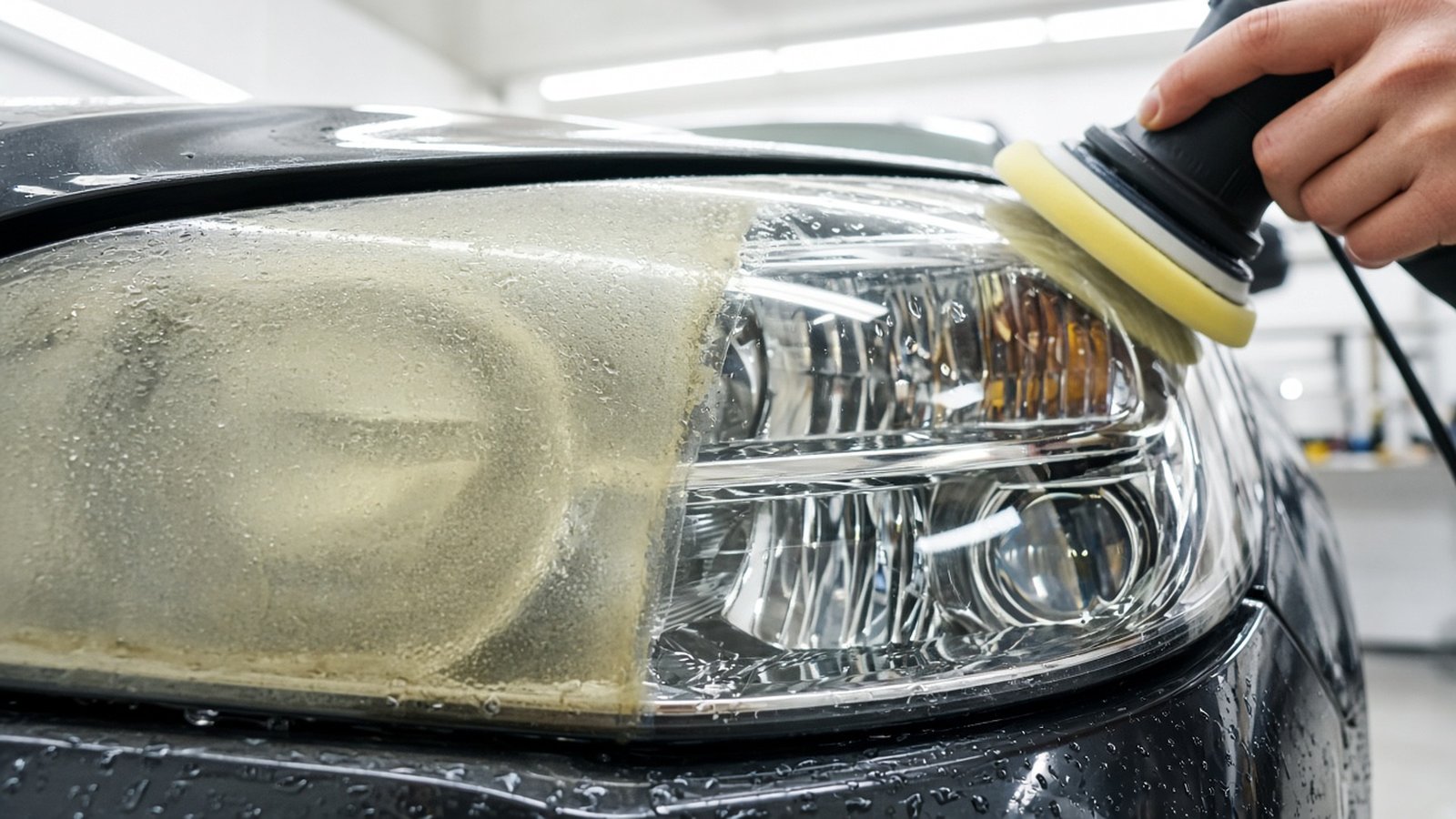
Cloudy or yellowed headlights cut visibility as October evenings get darker. Here's how in-shop headlight restoration at our Burnaby studio clears lenses and adds UV protection, quote only, no published price.
October evenings in Metro Vancouver get dark early. Add rain, wet pavement and oncoming glare, and cloudy or yellowed headlights stop being a cosmetic annoyance — they cut how far you can see and how well other drivers see you.
Plastic headlight lenses haze and yellow over time from UV, road grit and weather. A wash will not fix that. Headlight restoration — sanding, polishing and sealing the lens with a UV-resistant coating — is an add-on on our paint correction page, done as an in-shop drop-off at our Burnaby studio. There is no published price on the site; we quote after we see the lenses and the vehicle.
Here's why fall is a good time to deal with cloudy headlights, what the process actually does, and how to book it.
Why headlights look worse by October
Modern headlights use clear plastic (polycarbonate) covers, not glass. Plastic is lighter and easier to shape, but it oxidises and scratches. UV from summer sun breaks down the factory clear coat on the lens. Road film, sand and grit etch the surface. Moisture and temperature swings add to the haze.
By fall you often notice:
- A yellow or milky film across the lens
- Uneven brightness — one side clearer than the other
- A "fogged" look that makes the beam look weaker at dusk
- More scatter and glare when you drive in rain after dark
None of that is fixed by washing the car or wiping the lens with glass cleaner. The damage is in (and on) the plastic. Restoration removes that damaged layer and protects what is underneath.
How cloudy lenses hurt night driving
Headlights are aimed and designed for a certain output. When the lens is cloudy, light scatters instead of projecting cleanly down the road. You lose distance and edge definition. Oncoming traffic can see more glare from your haze even while you see less of the lane ahead.
Metro Vancouver's October mix — earlier sunset, frequent rain, reflective wet asphalt — makes that worse. You are already dealing with shorter daylight and wet roads; a pair of yellowed lenses stacks on top of that.
Restoring the lenses will not turn old halogen bulbs into new LEDs, and it will not fix a misaligned beam or a failed bulb. What it does is clear the plastic so the light you already have can leave the housing properly. That is the visibility gain most people notice after a proper restore.
What headlight restoration includes
On our paint correction service page, headlight restoration is listed as an add-on. The work typically includes:
- Masking and prep — protect surrounding paint and trim so sanding and polish stay on the lens.
- Wet sanding — graded abrasives remove the oxidised, yellowed outer layer of the plastic.
- Polishing — machine polish brings the lens back to optical clarity.
- UV-resistant seal / coating — a protective layer so the clear finish is less likely to yellow again as quickly under sun and weather.
The goal is clearer light output and better night visibility — not a temporary wipe-on shine that fades in a few weeks. A proper seal matters as much as the polish; sanding without UV protection leaves fresh plastic exposed to the same sun that yellowed the factory coating.
Exact scope depends on how far gone the lenses are. Light haze may need less sanding than heavily yellowed, pitted covers. We assess both sides at the studio and quote from there. The paint correction page does not list a dollar amount for headlights — pricing is quote-only after we see the vehicle.
Shop drop-off only — not a mobile add-on
Headlight restoration needs controlled lighting, clean water for wet sanding, and a dust-free bay so grit does not scratch the freshly sanded plastic. That is the same reason full paint correction is done at the studio, not from the van.
You drop the car at 4399 Lougheed Hwy, Burnaby. We restore the lenses (and any other shop work you booked, such as paint correction) indoors. You pick up when the job is finished and inspected.
Mobile detailing still covers washes, decontamination and interior work at your home or workplace across the Lower Mainland. Headlights are not part of that driveway service. If you want both a mobile wash and restored headlights, plan them as separate visits: mobile for the exterior/interior, then a shop drop-off for the lenses.
Signs it is time (and when it is not enough)
Worth restoring when:
- Lenses look yellow, milky or etched in daylight
- Night beams look weaker than they used to on the same bulbs
- One lens is clearly worse than the other
- You can feel roughness or haze when you run a clean finger lightly over the plastic (gently — do not grind dirt into the lens)
May need more than restoration:
- Cracked or broken lens housings
- Moisture trapped inside the housing (condensation that will not clear)
- Burned or failed bulbs / modules — those are electrical or lamp issues, not lens clarity
- Aftermarket tinted covers that fight beam output — we do not do window tint or wrap work
If the housing is cracked or full of water, clearing the outer plastic will not fix the leak. Tell us what you see when you request a quote so we can set expectations before you drop off.
How this fits with paint correction (without making it a ceramic post)
Headlight restoration sits on the same paint correction page as single-, two- and three-stage machine polishing because both are controlled shop processes. Many customers who bring a car in for correction also want the lenses done in the same visit. That is optional — you can book headlights on their own.
If you are also planning a ceramic coating later, clearer headlights are separate from paint prep. Coating protects the paint; restoration clears and seals the plastic lenses. Do not treat headlight restore as a substitute for correcting swirls on the clear coat, and do not expect a driveway wash to replace either job.
Keep the focus simple for this visit: lenses first if visibility is the pain point. Paint stages and coating can be quoted on the same form if you want them in one drop-off.
Quick answers
Will a kit from the store last as long?
DIY kits vary. Many skip a durable UV seal or use thin protection that yellows again quickly. Our process sands, polishes and seals with a UV-resistant coating in a controlled shop bay. Longevity still depends on sun exposure, washing habits and climate — Metro Vancouver UV and road grit are real.
Is there a fixed price on the website?
No. Headlight restoration is quote-only on the paint correction page. Send year, make, model and a short note (or photos) of how cloudy the lenses look, and we will quote before you drop off.
Can you restore headlights at my house?
No. This is Burnaby studio work only, same as paint correction.
Does restoration replace bulbs or aim the headlights?
No. It restores the plastic lens clarity and adds UV-resistant protection. Bulbs, modules and aim are separate.
How long does it take?
It depends on lens condition and whether you are combining headlights with paint correction the same day. We confirm timing when we quote.
Book headlight restoration at the Burnaby studio
If darker October evenings have made cloudy or yellowed headlights hard to ignore, request a quote for headlight restoration on our paint correction page. The form includes Headlight Restoration as a selectable service — add your year, make and model and a quick note about the lenses.
Work happens at our studio at 4399 Lougheed Hwy, Burnaby. Prefer to talk it through first? Call us at (604) 360-9813, Monday to Sunday, 8 AM to 8 PM.
Ask about paint correction
Paint correction is an in-shop service at the Burnaby studio.